
Have you ever come across the term “SDM full form” and wondered what it means? You’re not alone! Many people are curious about what SDM stands for and the role it plays in our society.
Whether you’re a student, someone interested in government jobs, or simply a curious reader, understanding the SDM full form can give you some insight into an important position within the administrative system.
In this article, we’ll break it down in simple terms, so you’ll have a clear understanding of what SDM is all about. Let’s dive in!
What Does SDM Stand For?
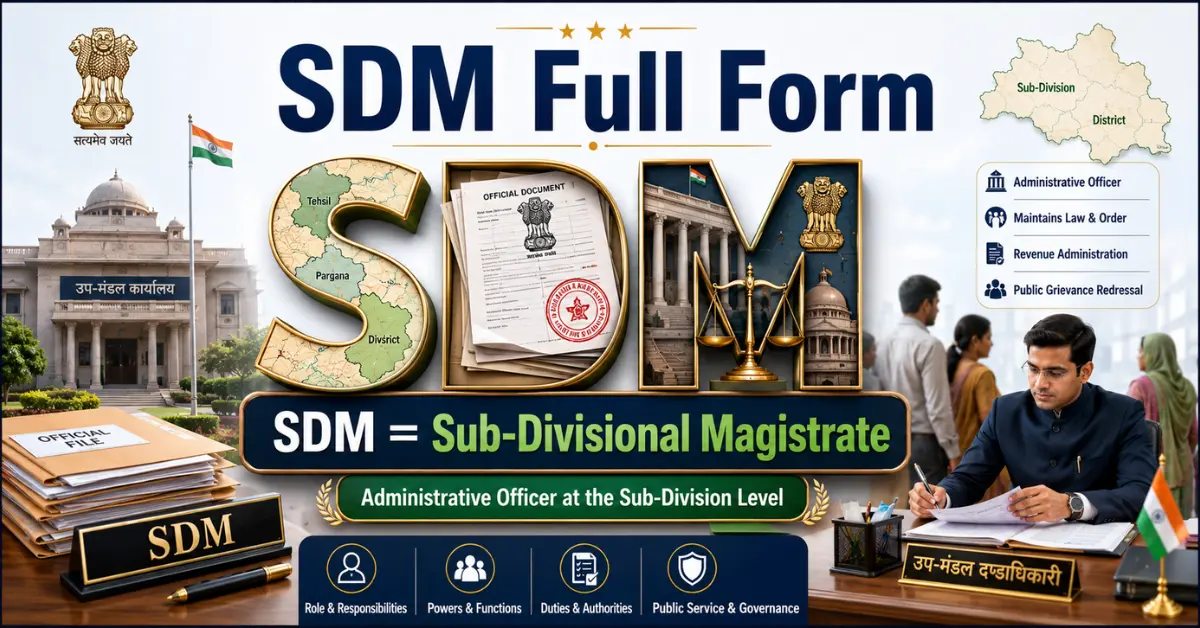
SDM stands for Sub Divisional Magistrate, a key position in the administrative hierarchy.
In many countries, especially in India, the role of an SDM is vital in ensuring that the government’s policies and laws are implemented effectively at the ground level.
The term Sub Divisional Magistrate refers to an officer who is in charge of a sub-division within a district.
A sub-division is essentially a smaller administrative unit within a district, and the SDM oversees various administrative functions in that area.
The SDM works under the supervision of the District Magistrate (DM) and handles numerous important tasks.
These include managing local government schemes, ensuring law and order, handling revenue-related issues, and even overseeing local law enforcement.
Essentially, an SDM acts as a representative of the district administration in their specific sub-division.
The role of an SDM is both administrative and judicial in nature.
Not only do they manage day-to-day administrative duties, but they also have certain judicial powers, which include hearing cases related to land disputes, maintaining peace during public events, and handling emergencies.
In simple terms, an SDM is like a mini-district head who takes care of everything within their assigned sub-division.
They are responsible for making sure that the local administration runs smoothly, and they play a significant part in the governance of the area.
SDM Full Form in English
The SDM full form in English is Sub Divisional Magistrate. This title represents a crucial position within the administrative structure, primarily in countries like India.
The term “Sub Divisional Magistrate” is made up of three words:
- Sub – This refers to something that is below or under a larger unit. In this case, a sub-division is a smaller administrative unit within a district.
- Divisional – This relates to the division of a larger region, indicating that the sub-division is part of a bigger district or division.
- Magistrate – A magistrate is a judicial officer responsible for maintaining law and order. In the case of an SDM, this term indicates that the person has certain legal and judicial powers in their assigned sub-division.
- So, the Sub Divisional Magistrate (SDM) is an officer who oversees the administration and enforcement of laws in a sub-division of a district. They hold significant responsibilities, including supervising local government activities, ensuring public safety, resolving disputes, and enforcing laws. The SDM typically works under the guidance of the District Magistrate (DM), who manages the entire district.
In addition to administrative tasks, the SDM also has judicial powers. For example, they can preside over minor legal cases, manage land-related disputes, and ensure the execution of certain legal processes within their jurisdiction.
To sum it up, the Sub Divisional Magistrate (SDM) plays a crucial role in the effective governance of a region, balancing both administrative and judicial duties to maintain order and public welfare.
SDM Full Form in Hindi
SDM का पूर्ण रूप है – उप विभागीय मजिस्ट्रेट (Up Vibhagiya Magistrate)। यह एक महत्वपूर्ण प्रशासनिक पद है जो विशेष रूप से भारत में प्रचलित है। “उप विभागीय मजिस्ट्रेट” शब्द के तीन हिस्से हैं:
- उप (Sub) – यह शब्द किसी बड़ी इकाई के नीचे या छोटे स्तर के प्रशासनिक क्षेत्र को संदर्भित करता है। यहां “उप विभाग” एक जिला का छोटा प्रशासनिक इकाई है।
- विभागीय (Divisional) – यह शब्द उस क्षेत्र के विभाजन को दर्शाता है, जो एक बड़े क्षेत्र या जिले के भीतर एक छोटे प्रशासनिक इकाई का हिस्सा है।
- मजिस्ट्रेट (Magistrate) – मजिस्ट्रेट का मतलब न्यायिक अधिकारी से है, जो कानून और व्यवस्था बनाए रखने की जिम्मेदारी रखते हैं। SDM का पद होने के कारण, इसमें न्यायिक अधिकार भी होते हैं, जो उन्हें छोटे स्तर के न्यायिक मामलों को हल करने का अधिकार देते हैं।
इस प्रकार, उप विभागीय मजिस्ट्रेट (SDM) एक ऐसा अधिकारी है जो जिले के छोटे हिस्से यानी उप विभाग का प्रशासन चलाता है। यह अधिकारी जिला मजिस्ट्रेट (DM) के अधीन कार्य करता है और कई प्रशासनिक कार्यों को निभाता है। SDM का कार्य केवल प्रशासनिक ही नहीं, बल्कि न्यायिक भी होता है। वे भूमि विवादों का समाधान करने, सरकार की योजनाओं के क्रियान्वयन की निगरानी करने और सार्वजनिक सुरक्षा बनाए रखने जैसे कार्यों में शामिल होते हैं।
SDM के पास न्यायिक अधिकार भी होते हैं, जिसके अंतर्गत वे कुछ छोटे कानून मामलों को सुलझाने का काम करते हैं। इसके अलावा, SDM को कानून और व्यवस्था बनाए रखने, आपातकालीन स्थितियों का प्रबंधन, और चुनावी कार्यों में भी भूमिका निभानी होती है।
FAQs
What is the role of an SDM?
The Sub Divisional Magistrate (SDM) is responsible for managing the administration and law enforcement within a sub-division of a district. They oversee government policies, supervise revenue collection, handle judicial duties like resolving land disputes, and ensure public safety. The SDM also works closely with local police and helps in managing emergencies, including disaster situations.
How does one become an SDM?
To become an SDM, one needs to clear the Civil Services Examination conducted by the Union Public Service Commission (UPSC) in India. This exam is highly competitive, and candidates must pass various stages including preliminary exams, main exams, and an interview. After clearing the exams, candidates are appointed to various civil services roles, including that of an SDM.
What are the powers of an SDM?
An SDM has both administrative and judicial powers. Administratively, they supervise local government programs, maintain law and order, and enforce government regulations. Judicially, they have the authority to hear cases related to land disputes, public safety, and minor criminal offenses. They also have emergency powers during natural calamities and other crises.
Is the SDM position a senior role?
Yes, the SDM is a senior and respected position within the administrative structure. While they work under the District Magistrate (DM), they are entrusted with significant authority in managing local governance. The SDM also plays an essential role in the implementation of government schemes and the maintenance of law and order within their sub-division.
Can an SDM be transferred?
Yes, an SDM can be transferred, just like other government officials. Transfers are usually decided by the state or central government based on administrative requirements. An SDM may be posted to a different sub-division or district based on the needs of the administration or as part of routine rotations within the civil services.
Conclusion
In conclusion, the Sub Divisional Magistrate (SDM) plays a vital role in the administration of a sub-division within a district.
From maintaining law and order to overseeing local government activities, the SDM ensures that everything runs smoothly at the grassroots level.
Whether you’re interested in pursuing a career as an SDM or simply wanted to understand the role better, it’s clear that this position is essential for effective governance.
With both administrative and judicial responsibilities, the SDM helps bridge the gap between the government and the public, making a significant impact on local communities.
Extra Points
- Part of Civil Services: An SDM is usually an officer of the Indian Administrative Service (IAS) or other civil services, which means they have received high-level training to manage various administrative tasks effectively.
- Helps in Elections: During elections, the SDM plays an important role in ensuring that the process is fair and smooth in their sub-division. They oversee election-related activities like voter registration and polling station management.
- Disaster Management: The SDM is often in charge of coordinating relief efforts during natural disasters like floods or earthquakes. They help ensure that help reaches the affected people quickly and effectively.
- Maintains Public Peace: Whether it’s organizing a public event or handling a sudden emergency, the SDM is responsible for maintaining public order. They work with local authorities to prevent and address any issues that could disrupt peace in the area.
- Educational and Health Schemes: The SDM also supervises the implementation of government programs related to education, healthcare, and social welfare within their sub-division. They ensure that these services reach the people who need them the most.