If you’ve ever flown on an airplane, you’ve likely heard the term ATC full form mentioned by the pilot or seen it in aviation-related discussions.
But what does ATC really mean, and why is it so important? ATC stands for Air Traffic Control, and it’s a crucial part of ensuring safe and smooth air travel.
Whether you’re a frequent flyer or just curious about how flights are managed in the skies, understanding the role of ATC helps us appreciate the safety and coordination that happens behind the scenes.
In this article, we’ll dive into what ATC is, its full form in both English and Hindi, and answer some frequently asked questions to give you a clear understanding of its significance in aviation.
What Does ATC Stand For?
ATC stands for Air Traffic Control. It is the system responsible for managing and directing the movement of aircraft within the airspace and at airports.
The primary purpose of ATC is to ensure the safety of flights by preventing collisions between aircraft and providing the necessary instructions to pilots for safe navigation.
Air Traffic Control involves a network of highly trained professionals—Air Traffic Controllers—who use advanced technology, such as radar and communication systems, to monitor the position and movement of aircraft.
They provide real-time instructions to pilots, guiding them on their flight paths, ensuring they maintain safe altitudes, and advising on any adjustments to avoid other aircraft or obstacles.
There are several types of Air Traffic Control services, each responsible for different aspects of air travel:
- Ground Control: This deals with aircraft movements on the ground, like taxiing to and from runways.
- Tower Control: This manages the aircraft as they take off or land on the runway.
- Approach Control: This focuses on aircraft as they approach an airport for landing, guiding them through safe and efficient flight paths.
- Area Control (En Route): This oversees flights as they travel between airports, managing air traffic in large sections of airspace.
The ATC system operates 24/7, ensuring that no matter where an aircraft is in the world, it is always under the watchful eye of a skilled controller.
This coordination is essential not only for safety but also for efficient air traffic flow, preventing delays and optimizing the use of airspace.
In essence, Air Traffic Control is a complex and vital system that helps pilots, airports, and aviation authorities work together to maintain the smooth and safe operation of air travel globally.
ATC Full Form in English
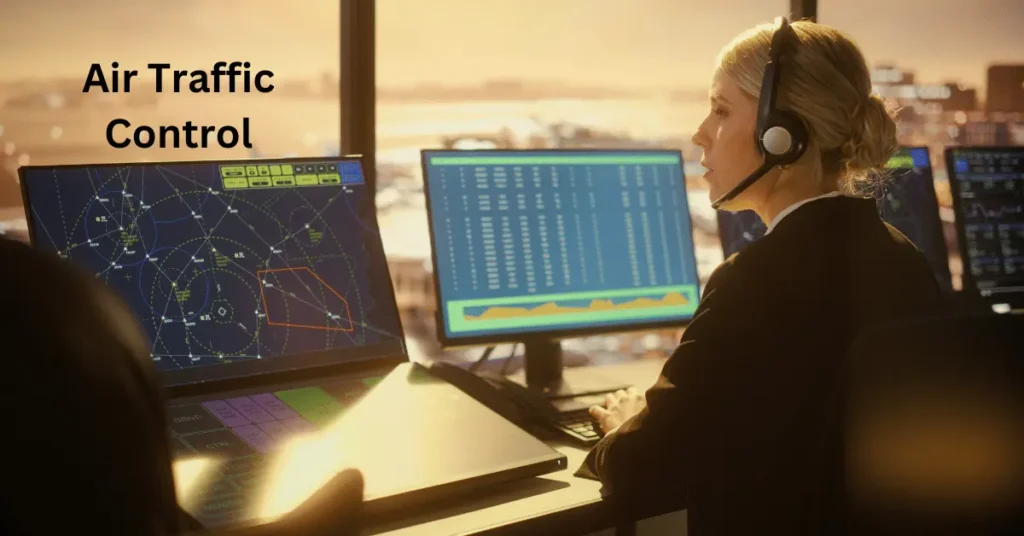
The full form of ATC in English is Air Traffic Control. It refers to the service provided by trained personnel to manage and guide aircraft during their flight, ensuring safety, efficiency, and smooth operations in the airspace.
Air Traffic Control is an essential component of the aviation industry, coordinating the safe movement of airplanes both on the ground and in the sky.
The role of Air Traffic Control (ATC) includes
- Preventing Collisions: One of the primary functions of ATC is to avoid mid-air collisions by ensuring aircraft maintain safe distances from each other. Controllers guide planes along designated routes and altitudes, helping pilots navigate crowded airspace.
- Managing Air Traffic Flow: ATC helps in optimizing the flow of air traffic, making sure planes take off, land, and move through the air at the right times and in the right order. This reduces delays and ensures that airspace is used as efficiently as possible.
- Providing Instructions to Pilots: Air Traffic Controllers communicate directly with pilots, giving instructions about altitude changes, flight paths, weather conditions, and any other important information to ensure a safe journey.
- Assisting During Emergencies: In case of an emergency, ATC plays a crucial role in providing support to the pilot, guiding them to safety, and managing any necessary diversions or emergency landings.
The ATC system is broken down into several distinct areas, each handling different stages of a flight:
- Ground Control: Manages the movement of aircraft on the ground, including taxiing to and from runways.
- Tower Control: Oversees takeoffs and landings, ensuring aircraft are cleared to enter or leave the runway.
- Approach Control: Guides aircraft as they approach an airport for landing, ensuring smooth transitions into landing patterns.
- Area Control (En Route): Manages aircraft flying at higher altitudes between airports, directing them along their flight paths and managing airspace traffic in wide geographic areas.
Air Traffic Control is vital for the safety of millions of passengers who fly every day. Without ATC, the skies would be chaotic and dangerous, making air travel a risky venture.
Controllers, using radar, radio communications, and other advanced technologies, ensure that air travel remains one of the safest modes of transportation in the world.
ATC Full Form in Hindi
ATC का पूरा रूप है एयर ट्रैफिक कंट्रोल। यह वह सेवा है जो हवाई जहाजों की सुरक्षित और व्यवस्थित उड़ान को सुनिश्चित करने के लिए हवाई यातायात का प्रबंधन करती है। एयर ट्रैफिक कंट्रोल (ATC) का मुख्य उद्देश्य यह सुनिश्चित करना है कि सभी विमानों के बीच टकराव न हो, विमान सही मार्ग पर उड़ान भरें और यातायात की स्थिति को सुचारू रूप से नियंत्रित किया जाए।
एयर ट्रैफिक कंट्रोल (ATC) के द्वारा निभाए जाने वाले कुछ मुख्य कार्यों में शामिल हैं:
- हवाई टकराव से बचाव: ATC का प्रमुख कार्य विमान के बीच टकराव से बचाव करना है। यह विमान को सुरक्षित दूरी पर रखने के लिए उन्हें सही ऊंचाई और मार्ग पर मार्गदर्शन करता है।
- हवाई यातायात का प्रबंधन: ATC यह सुनिश्चित करता है कि विमान सही समय पर उड़ान भरें, लैंड करें और आकाश में सही तरीके से यात्रा करें। इससे हवाई यातायात में कोई रुकावट नहीं आती और यह अधिक प्रभावी ढंग से काम करता है।
- पायलट को निर्देश देना: एयर ट्रैफिक कंट्रोलर्स पायलट से सीधे संपर्क में रहते हैं और उन्हें उड़ान के दौरान ऊंचाई, मार्ग, मौसम की जानकारी और अन्य महत्वपूर्ण निर्देश देते हैं।
- आपातकालीन परिस्थितियों में मदद: अगर किसी विमान में आपातकालीन स्थिति उत्पन्न होती है, तो ATC पायलट को मार्गदर्शन देने में मदद करता है और सुरक्षा के लिए सही कदम उठाता है, जैसे कि आपातकालीन लैंडिंग या मार्ग परिवर्तन।
एटीसी प्रणाली में विभिन्न प्रकार की सेवाएँ होती हैं, जिनमें से प्रत्येक विमान के उड़ान के विभिन्न चरणों में मदद करती है:
- ग्राउंड कंट्रोल: यह विमान के रनवे से टैक्सी करने और रनवे पर उतरने जैसे हवाई अड्डे के ग्राउंड पर गतिविधियों का प्रबंधन करता है।
- टावर कंट्रोल: यह विमान के रनवे पर उतरने और उड़ान भरने के लिए उन्हें अनुमति देता है और सुनिश्चित करता है कि किसी अन्य विमान से टकराव न हो।
- एप्रोच कंट्रोल: यह विमान को हवाई अड्डे के पास लैंडिंग के लिए सुरक्षित मार्गदर्शन प्रदान करता है।
- एरिया कंट्रोल (एन-रूट): यह विमान को ऊंचे आकाश में एक एयरपोर्ट से दूसरे एयरपोर्ट तक सुरक्षित मार्गदर्शन प्रदान करता है और हवाई यातायात का प्रबंधन करता है।
एयर ट्रैफिक कंट्रोल (ATC) की भूमिका हवाई यात्रा के सुरक्षित संचालन में अत्यधिक महत्वपूर्ण है। यह सुनिश्चित करता है कि हम सभी यात्रियों के लिए हवाई यात्रा सुरक्षित और व्यवस्थित हो, जिससे विमान दुर्घटनाओं का जोखिम कम हो। इसके बिना, आकाश में हवाई यातायात अव्यवस्थित और खतरनाक हो सकता था।
FAQs
What is Air Traffic Control (ATC)?
Air Traffic Control (ATC) is a service provided by air traffic controllers to ensure the safe and efficient movement of aircraft in the airspace and on the ground. ATC involves monitoring, guiding, and managing the movement of airplanes to avoid collisions, manage air traffic flow, and assist pilots during their flights. Controllers communicate with pilots to provide instructions on flight paths, altitudes, and safe distances from other aircraft.
Why is Air Traffic Control important for air travel?
Air Traffic Control is crucial for air travel because it ensures the safety of millions of passengers flying daily. Without ATC, there would be a high risk of mid-air collisions, traffic congestion in the skies, and delays at airports. ATC helps manage aircraft spacing, provides instructions to pilots, and ensures smooth operations of flights from takeoff to landing, minimizing the risk of accidents and improving the overall efficiency of air travel.
How does Air Traffic Control work?
Air Traffic Control works through a system of communication between air traffic controllers and pilots. Controllers use radar, radio, and other technologies to track the movement of aircraft. They provide pilots with real-time instructions on flight paths, altitude changes, weather conditions, and potential hazards. Depending on the phase of the flight, different controllers handle the aircraft:
Ground control: Manages aircraft on the ground.
Tower control: Oversees takeoff and landing.
Approach control: Manages aircraft as they approach an airport.
Area control: Guides aircraft during en-route flights.
What qualifications are needed to become an Air Traffic Controller?
To become an Air Traffic Controller, one typically needs to complete specialized training programs offered by national aviation authorities. Key qualifications include a high school diploma or equivalent, strong communication skills, problem-solving abilities, and the ability to stay calm under pressure. Many countries require controllers to pass written tests, medical exams, and intensive training programs that include both classroom instruction and on-the-job training. Controllers must also undergo regular assessments to maintain their certification.
What are the different types of Air Traffic Control services?
Air Traffic Control services are divided into several types based on the phase of the flight:
Ground Control: Manages aircraft movements on the ground, including taxiing to and from runways.
Tower Control: Manages takeoff and landing operations on the runways.
Approach Control: Guides aircraft as they approach an airport for landing, ensuring they enter the airspace safely.
Area Control (En Route): Oversees aircraft flying between airports, managing larger sections of airspace and directing aircraft on their routes.
Each type of control service ensures smooth and safe operations for aircraft at different stages of their journey.
Conclusion
In conclusion, Air Traffic Control (ATC) plays a vital role in ensuring the safety and smooth operation of air travel. It helps manage the movement of aircraft both in the sky and on the ground, preventing accidents and ensuring that flights run on time.
By guiding pilots and managing airspace, ATC makes sure that millions of passengers reach their destinations safely every day.
Understanding ATC’s full form and its importance gives us a greater appreciation for the work that goes into every flight.
Extra Points on Air Traffic Control (ATC)
- 24/7 Operations: Air Traffic Control operates 24 hours a day, 7 days a week, all year round. Whether it’s day or night, ATC is always there to manage air traffic and ensure safety in the skies.
- Global Network: ATC services are available all over the world, ensuring that air traffic is managed consistently, no matter where a plane is flying. Each country has its own ATC system, but they all work together to make global air travel safe.
- Advanced Technology: Air Traffic Controllers rely on advanced radar systems, satellite technology, and communication tools to track aircraft and guide them safely. This technology helps them monitor planes even when they are far away from the airport.
- Highly Trained Professionals: Air Traffic Controllers undergo intense training to handle stressful situations and make quick decisions. They play a critical role in keeping air travel safe, and their expertise is key to managing complex air traffic.
- Coordination is Key: ATC requires constant coordination between different controllers—such as ground, tower, and approach controllers—to ensure smooth and safe transitions for aircraft at different stages of their flight.